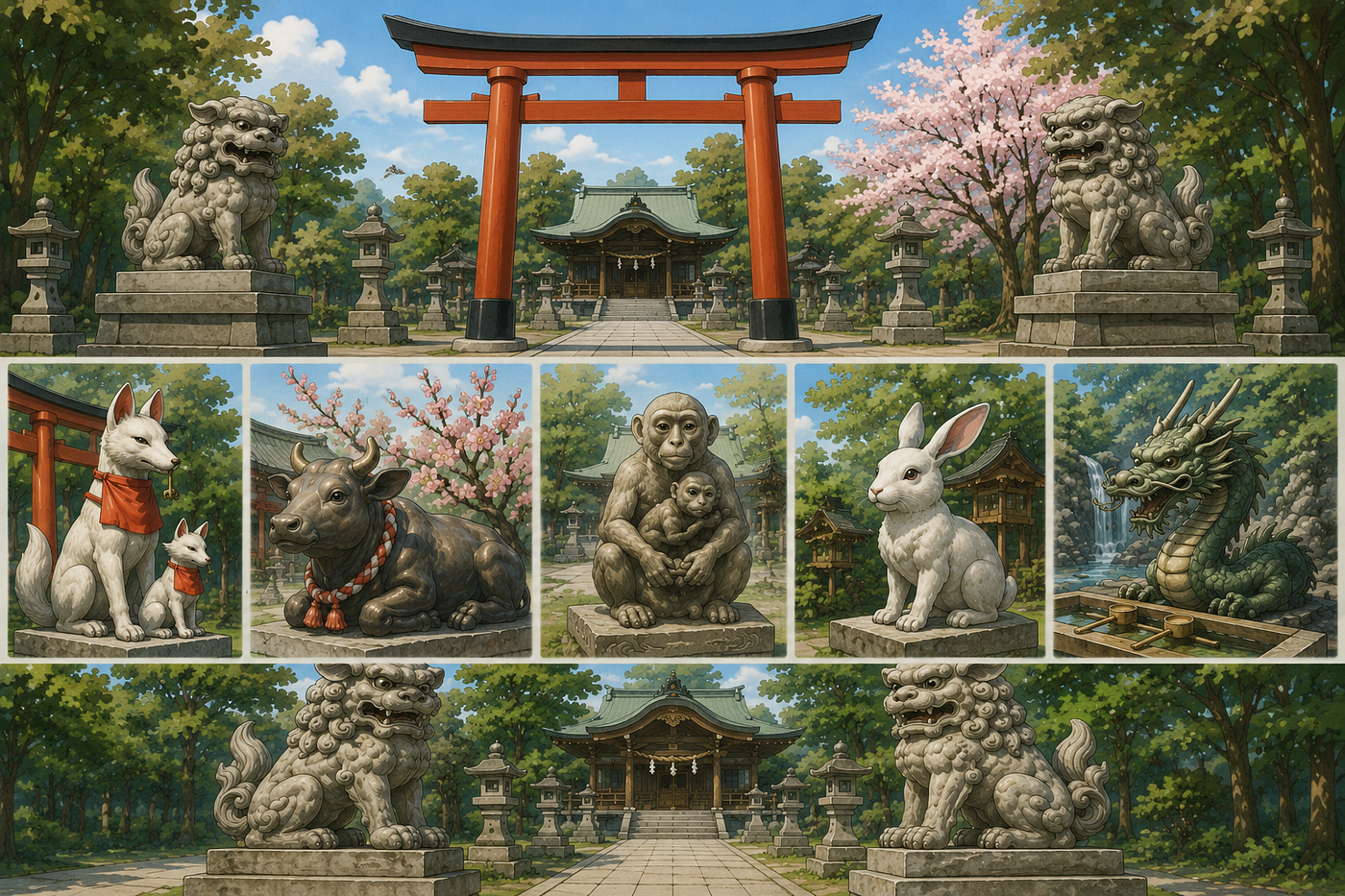
If you’re traveling in Japan, you’ll probably visit several Shinto shrines.
Many visitors admire the beautiful gates and peaceful atmosphere — but few realize that shrines are full of hidden meanings.
Once you know what to look for, every shrine tells a different story.
1. The Torii Gate: The Entrance to Sacred Ground
The easiest way to recognize a Shinto shrine is by its torii gate.
A torii marks the boundary between the ordinary world and the sacred world where the gods (kami) are believed to reside.
As you pass through the gate, you’re symbolically entering a holy place.
Unlike Buddhist temples, shrines generally do not have statues of Buddha or other religious figures inside the worship hall. Instead, the deity is believed to be present spiritually rather than physically.
2. Guardian Animals Protect Every Shrine
One of the most fascinating features of Japanese shrines is the guardian animals.
Near the entrance, you’ll often find a pair of animal statues watching over the shrine.
Most foreign visitors know about the lion-dog (komainu), but many shrines have different animals depending on the deity they enshrine.
Each animal carries its own symbolism.
🦊 Fox (Inari Shrine)
Foxes are the messengers of Inari, the god of rice, agriculture, and prosperity.
At famous shrines like Fushimi Inari Taisha in Kyoto, you’ll see countless fox statues.
People once believed foxes protected rice fields because they hunted the mice that damaged crops.
Today, Inari shrines are also popular among business owners who pray for success and prosperity.
🐄 Cow (Tenmangu Shrine)
Shrines dedicated to Sugawara no Michizane, the god of learning, often feature cows.
Students gently rub the cow statues before exams, believing it brings wisdom and academic success.
That’s why shrines such as Kitano Tenmangu in Kyoto become crowded during entrance exam season.
🐒 Monkey (Hie Shrine)
Monkeys are considered sacred messengers at some shrines.
They are believed to protect families, ensure safe childbirth, and bring good fortune.
🐇 Rabbit (Okazaki Shrine and Others)
Rabbits symbolize fertility, safe childbirth, and new beginnings.
Because rabbits produce many offspring, they became symbols of family happiness and prosperity.
🐉 Dragon
Dragons represent water, rain, and powerful natural energy.
Many shrines with springs, waterfalls, or mountain streams feature dragon imagery.
3. Every Animal Has a Meaning
Japanese culture often connects animals with lucky sayings.
For example:
● Crane — “A crane lives for a thousand years.”
● Turtle — “A turtle lives for ten thousand years.”
These expressions symbolize longevity and good fortune.
This is why you’ll frequently see cranes and turtles in Japanese art, gardens, and traditional celebrations.
4. Shrines Are More Than Tourist Attractions
Shrines aren’t museums.
They remain active places where local people visit to pray for:
● Good health
● Success in business
● Academic achievement
● Safe childbirth
● Traffic safety
● Protection for family members
Understanding these traditions allows visitors to appreciate shrines on a much deeper level.
Final Thoughts
The next time you visit a Japanese shrine, don’t just take photos of the torii gate.
Look carefully at the guardian animals.
Ask yourself:
Why is this animal here?
Once you know the answer, you’ll discover that every shrine has its own personality — and its own story waiting to be told.
#Japan #Kyoto #JapaneseCulture #Shinto #Travel #TourGuide #CulturalHeritage #VisitJapan #Storytelling #LifelongLearning
Comments
Post a Comment