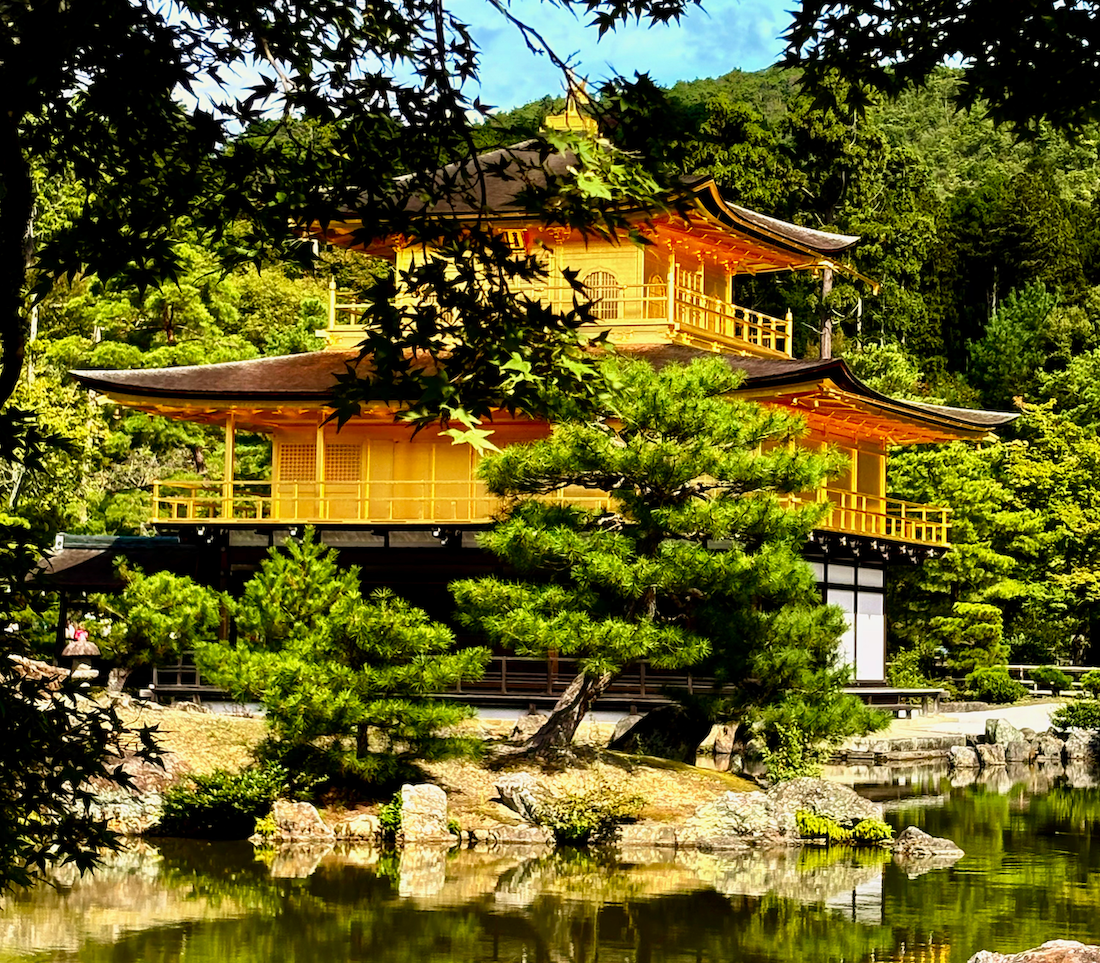
Kinkaku-ji: The Tragedy Behind the Golden Beauty


Kinkaku-ji, the Golden Pavilion, stands quietly beside a still pond in northern Kyoto.
Its reflection on the water feels timeless, almost unreal.
To many visitors, it represents peace, elegance, and the refined beauty of Japan.

But behind its golden surface lies a tragic story.

Kinkaku-ji was built in the late 14th century by Ashikaga Yoshimitsu, a powerful shogun of the Muromachi period.
For Yoshimitsu, the pavilion was more than a residence — it was a symbol of authority, wealth, and an ideal world shaped by his vision.

Covered in gold leaf, the building embodied perfection.
It was meant to endure.

After Yoshimitsu’s death, however, the world around Kinkaku-ji began to change.
Kyoto was gradually drawn into centuries of conflict and instability.
The pavilion survived wars and fires, standing silently as the city suffered.

Then, in 1950, tragedy struck from within.

Press enter or click to view image in full size

A young Buddhist monk set fire to Kinkaku-ji, reducing the famous pavilion to ashes.
The act shocked the nation.

The monk later revealed a deep obsession with beauty —
and a painful sense of inferiority before something so flawless.

To him, the Golden Pavilion was not comforting.
It was overwhelming.

Its perfect beauty became a constant reminder of his own imperfections,
until admiration turned into destruction.

The flames consumed what many believed to be eternal.
Gold melted.
History collapsed in a single night.

Yet, in a cruel twist, the destruction only deepened the temple’s presence in Japan’s cultural memory.

The Kinkaku-ji we see today is a reconstruction, completed in 1955.
It shines as brightly as ever, reflected in the pond like a dream.

But beneath that elegance rests a quiet truth:
beauty can inspire, but it can also burden the human heart.

Kinkaku-ji is not simply a symbol of beauty.
It is a reminder that perfection, when placed before fragile lives,
can become something unbearable.

And still, it stands —
silent, golden, and watching.

Comments

Popular posts from this blog

🍁 Kyoto Autumn Night Viewings & Illumination Guide 2025 🍁

🍁 Kyoto Autumn Night Illuminations & Temple Light-Ups 2025 🍁 *All information may change. Please confirm on each official website before visiting. Dates are based on 2024 information unless confirmed for 2025. Table of Contents 1. Ninnaji Temple “Sea of Clouds” Illumination 2. Kodaiji & Entokuin Autumn Night Viewing 3. Yoshimine-dera Bamboo Light-Up 4. NAKED × Nijo Castle: Moonlight Exhibition 5. Kenninji “Fushiki – A Zen Light Experience” 6. Kitano Tenmangu Momiji Garden Illumination 7. Shouzan Garden Autumn Lights 8. Toji Temple Night Illumination 9. Kurama “Path of Tengu” Light-Up 10. Shoren-in Temple Main Hall Illumination 11. Kifune Shrine Main Approach Light-Up 12. Toyokuni Shrine Digital Light Performance 13. Ohara Hosen-in Temple Night Garden Light-Up 1. Ninnaji Temple “Sea of Clouds” Illumination Fri, Sat, Sun, Holidays Only Dates Oct 24 (Fri) – Dec 14 (Sun) *...

Why Japanese Izakaya Culture Is More Than Just Drinking After Work

  Izakaya and the Culture of Entertaining in Japan In Japan,  izakaya  — casual restaurants where people gather to eat and drink — are a common sight. But from an international perspective, izakaya are a unique blend of two worlds: in many Western countries, meals are typically enjoyed at restaurants, while alcohol is reserved for bars or pubs. The combination of food and drink in a single, laid-back setting is part of what makes izakaya culture so special. Izakaya menus are extensive, with dishes meant to be shared among groups. Diners enjoy small plates alongside a wide range of alcoholic options, including beer, sake , shochu , umeshu (plum wine), and fruit-flavored “ chuhai .” One surprising concept for many foreigners is the  “all-you-can-drink”  ( nomihodai ) option, often available for a set time. Late-night hours are another defining feature, with many izakaya staying open until the early morning. It’s common to move from one place to another in a night...

◆ Secret of enjoying Tonkotsu Ramen ◆

Do you like rich soup? If you like it, I highly recommend a popular Ramen shop called ZUNDO-YA . I heard that foreigners like the rich taste of TONKOTSU soup. Zundo's soup is made with only water and pork bones and is simmered for about 20 hours. To produce noodles with a firm texture, the artisans use high-quality wheat and produce them by hand with great care. I would say It is amazing noodles and soup go well together. The most popular Ramen is Aji-tama. Tama means seasoned egg which is slowly soaked in a special sauce to make it half-boiled to bring out the flavor of the pork bones. And I recommend the taste is KOTTERI which includes more back fat. I want you to try it. Zundo-ya has takana(Japanese giant red mustard ), red ginger, and fresh garlic on the table. If you are a cook, you know that everything tastes better when it is freshly grated or scrubbed. As time goes by, flavors and tastes are lost to some extent or another. At Zundouya, peeled cloves of garlic are placed in ...