
Nothing beats ODEN おでん at cold night! Don't forget SAKE!


Oden おでん is a traditional Japanese dish made by simmering various ingredients. It is a popular family dish. Many people enjoy eating it especially during winter. Oden soup stock is generally made from bonito flakes and seaweed. 

It is said to sell well at convenience stores in autumn. However, there are also convenience stores where oden is sold all year round, for Japanese who love oden.Oden is a staple food in Japanese pubs. You can also buy ingredients at a supermarket and cook it at home. It is also an attraction of oden that it goes well with sake.


★ Staple ingredients for oden is below.


大根(Daikon) 
Japanese radish –


ちくわ(Chikuwa)
Tube-shaped fish cake・A mixture of minced fish meat, salt, sugar, egg white and cornstarch


こんにゃく(Konnyaku)
Konjak / Konnyaku・Known also as “Devil’s Tongue”.・Interesting texture.


ゆでたまご(Yude tamago)
Boiled eggs –


はんぺん(Hanpen)
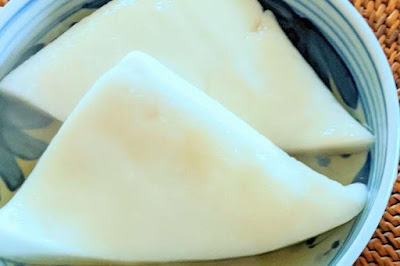
Boiled flat fish cake 
・A mixture of minced fish meat, sticky grated yamaimo and egg white.・”Fishy tasty marshmallow”


昆布(Konbu)
Japanese seaweed 
・Tied into a decorative knot.


厚揚げ(Atsuage)
Deep fried tofu –
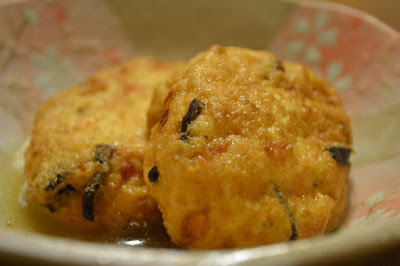


がんもどき(Ganmodoki)  ・Deep-fried fritter made of tofu and vegetables.


もち巾着(Mochi-kinchaku)
・Mochi-iri kinchaku is a pouch of deep-fried bean curd filled with sticky rice cake.


Thank you for reading my article
Feel free to leave a comment!


Comments

Popular posts from this blog

🍁 Kyoto Autumn Night Viewings & Illumination Guide 2025 🍁

🍁 Kyoto Autumn Night Illuminations & Temple Light-Ups 2025 🍁 *All information may change. Please confirm on each official website before visiting. Dates are based on 2024 information unless confirmed for 2025. Table of Contents 1. Ninnaji Temple “Sea of Clouds” Illumination 2. Kodaiji & Entokuin Autumn Night Viewing 3. Yoshimine-dera Bamboo Light-Up 4. NAKED × Nijo Castle: Moonlight Exhibition 5. Kenninji “Fushiki – A Zen Light Experience” 6. Kitano Tenmangu Momiji Garden Illumination 7. Shouzan Garden Autumn Lights 8. Toji Temple Night Illumination 9. Kurama “Path of Tengu” Light-Up 10. Shoren-in Temple Main Hall Illumination 11. Kifune Shrine Main Approach Light-Up 12. Toyokuni Shrine Digital Light Performance 13. Ohara Hosen-in Temple Night Garden Light-Up 1. Ninnaji Temple “Sea of Clouds” Illumination Fri, Sat, Sun, Holidays Only Dates Oct 24 (Fri) – Dec 14 (Sun) *...

The Global Love Affair with Japanese Culture #1

I t’s not uncommon to encounter people on platforms like YouTube and other social media who, surprisingly, have a deeper love for Japanese culture than many Japanese themselves. Among the aspects they are most passionate about are Japan’s entertainment offerings, such as manga , anime , and movies. The term “ otaku ” has even gained recognition overseas, and many people proudly refer to themselves as otaku. Interestingly, the word “otaku” originally had a  negative connotation  in Japan during the 2000s, used to describe middle-aged men who were enthusiasts of  computers, idols, or two-dimensional anime . However, with the widespread use of computers and smartphones, the term has taken on a positive meaning, referring to “ people who are deeply passionate about something ” or “ those who are highly knowledgeable in a particular field .” One reason for this reevaluation of otaku culture is the phenomenon of Japan’s  manga, anime, movies, games, and cosplay  gai...

Why Japanese Izakaya Culture Is More Than Just Drinking After Work

  Izakaya and the Culture of Entertaining in Japan In Japan,  izakaya  — casual restaurants where people gather to eat and drink — are a common sight. But from an international perspective, izakaya are a unique blend of two worlds: in many Western countries, meals are typically enjoyed at restaurants, while alcohol is reserved for bars or pubs. The combination of food and drink in a single, laid-back setting is part of what makes izakaya culture so special. Izakaya menus are extensive, with dishes meant to be shared among groups. Diners enjoy small plates alongside a wide range of alcoholic options, including beer, sake , shochu , umeshu (plum wine), and fruit-flavored “ chuhai .” One surprising concept for many foreigners is the  “all-you-can-drink”  ( nomihodai ) option, often available for a set time. Late-night hours are another defining feature, with many izakaya staying open until the early morning. It’s common to move from one place to another in a night...